Single-domain structure is the most basic and most common organizational form in nature. Its defining feature is that the entire organization contains only one independent organizational domain; all peripheral structures belong to the boundary of that domain, serving to maintain organizational integrity and to enable the exchange of matter, energy, and information between the organization and its environment, without forming a new independent domain. In the Unified Recursive Organization Theory, therefore, the criterion for single-domain structure depends on the number of organizational domains, not on the number of membrane layers, cell walls, or other boundary structures.
Single-domain structures are widespread in both non-living and living systems. In non-living systems, micelles, emulsion droplets, and various self-assembled structures formed by surfactants — although differing in composition and boundary form — each contain only a single continuous organizational body internally, and therefore all belong to single-domain structures. They illustrate that a single stable boundary is sufficient to maintain an independent organizational domain, without the need to form higher-level organizational structure.
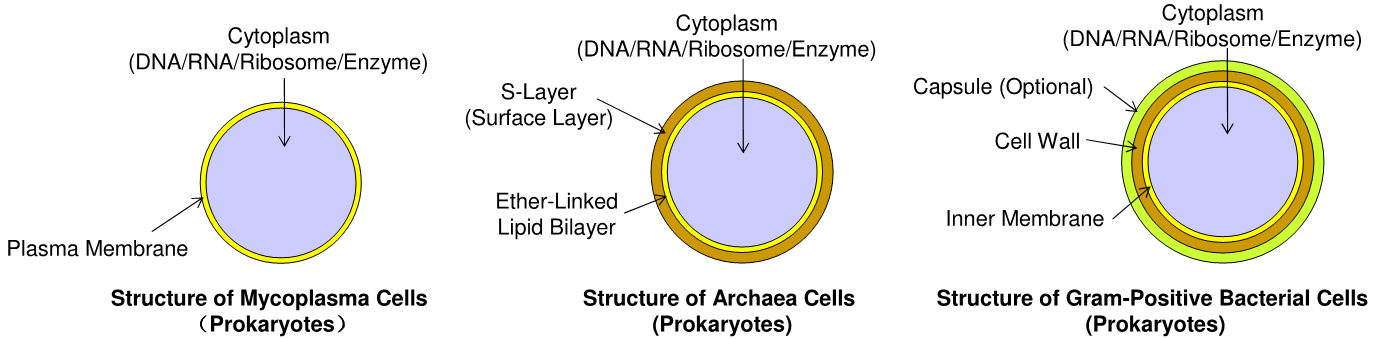
Fig. 2 Single-domain structure: unicellular prokaryotic microorganisms
Living systems follow the same organizational regularity. As shown in Fig. 2, Mycoplasma lacks a cell wall and is bounded solely by a cell membrane; Archaea possess a distinctive cell membrane composed of ether-linked lipids, often accompanied by peripheral structures such as an S-layer; and Gram-positive bacteria have a relatively thick peptidoglycan cell wall. Although these three groups differ markedly in boundary composition, chemical structure, and environmental adaptability, each possesses only a single continuous cytoplasmic organizational domain; their outer membrane, cell wall, or S-layer all belong to the boundary of the same organizational domain rather than forming a new independent domain, and can therefore all be uniformly classified as single-domain structures.
This result shows that the Domain–Boundary framework describes an organizational classification rather than a structural classification in the conventional sense. Boundaries may differ in composition, number of layers, and physical properties, but as long as they jointly enclose the same organizational body, they still correspond to a single organizational domain. A new organizational domain arises, entering a higher-level organizational structure, only when a new boundary encloses a new subject region with an independent organizational state.
Single-domain structure is therefore not only the most basic organizational form of living organization, but also the starting point for the evolution of all higher-level organization within the Unified Recursive Organization Theory. The double-domain structure, triple-domain structure, and more complex recursive organizational structures discussed below can all be regarded as new organizational levels formed, on the basis of single-domain structure, through continuous organization.